


Commercial Epoxy Flooring Cost Guide for Markham Toronto and GTA Businesses

A commercial floor is never just a surface. It affects maintenance costs, safety, downtime, sanitation, customer perception, equipment movement, and the long term condition of the concrete below it.
For property owners and facility managers in Markham, Toronto, and the GTA, epoxy flooring costs can vary widely because commercial spaces are built and used very differently. A retail unit in Unionville, a warehouse near Highway 407, a service bay in Scarborough, and a production area in Mississauga all need different preparation, coating thickness, topcoat performance, and scheduling.
This guide explains what drives commercial epoxy flooring cost GTA decisions, how reputable contractors build pricing, what the installation process should include, and how to judge return on investment beyond the initial price per square foot.
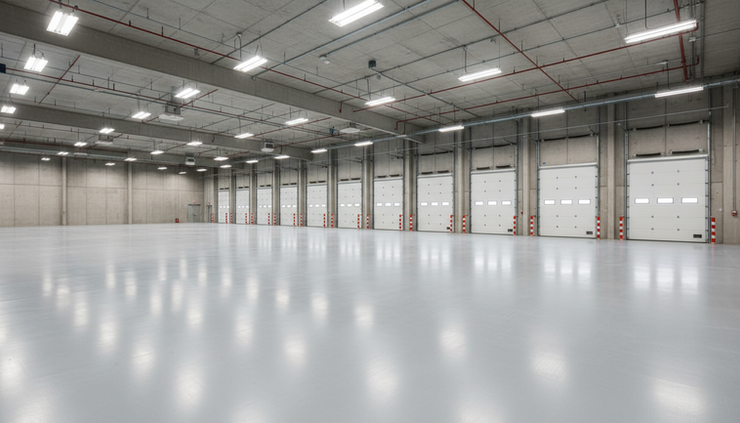
What commercial epoxy flooring costs in Markham Toronto and the GTA
Commercial epoxy flooring is normally priced by square foot, but the final quote should reflect the full system, not only the coating material. A proper commercial floor includes surface preparation, crack repair, moisture readings, primer if needed, epoxy build coats, broadcast media or flakes when specified, and a high performance topcoat such as polyaspartic or urethane.
The following planning ranges are in Canadian dollars and are intended for budgeting in Ontario. HST, unusual repairs, major moisture mitigation, occupied building constraints, and premium after hours scheduling may change the final price.
Commercial flooring system | Typical GTA budget range | Best suited for |
Basic commercial epoxy coating | $6 to $9 per sq. ft. | Light commercial storage, utility areas, low traffic rooms |
Standard commercial epoxy with protective topcoat | $8 to $14 per sq. ft. | Retail back rooms, offices with service areas, light industrial spaces |
Decorative flake epoxy with polyaspartic topcoat | $9 to $16 per sq. ft. | Showrooms, clinics, customer facing service areas, corridors |
Heavy duty epoxy broadcast system | $12 to $22 per sq. ft. | Warehouses, loading areas, production spaces, mechanical traffic zones |
Chemical resistant epoxy or urethane system | $15 to $28+ per sq. ft. | Food service, labs, process rooms, auto service, chemical storage zones |
Moisture control or specialty primer system | Add $4 to $10+ per sq. ft. | Slabs with elevated moisture vapour readings |
Crack, pit, and spall repair | Often $3 to $15+ per sq. ft. in affected areas | Damaged concrete, salt deterioration, forklift impact zones |
Small commercial projects may also carry a minimum project cost because mobilization, equipment transport, labour, diamond grinding, dust control, and setup time still apply. In the GTA, many professional commercial installations start with a minimum mobilization range of about $2,500 to $5,000 before HST, depending on the site and system.
A 1,000 sq. ft. back of house floor may have a higher cost per square foot than a 20,000 sq. ft. warehouse because setup costs spread across less area. Large projects often receive more efficient square foot pricing, but they may need more staging, longer cure planning, and stricter traffic control.
The main factors that influence commercial flooring cost
A reliable quote starts with the floor, not a price list. SurfacePro Epoxy Flooring evaluates each site because the concrete condition, use case, traffic load, and exposure risks determine the correct system.
Square footage and project scale
Square footage affects material volume, labour time, equipment wear, and number of installers. Large open areas are usually more efficient than small rooms with columns, drains, partitions, curbs, and equipment pads.
A 10,000 sq. ft. open warehouse can often be ground, coated, and topcoated more efficiently than several smaller mechanical rooms totalling the same size. The smaller rooms may need more edge grinding, hand work, masking, ventilation setup, and detail work around walls and penetrations.
When comparing epoxy flooring prices Ontario wide, the square foot price should always be tied to scope. A low number without preparation details is not a true comparison.
Existing concrete condition
Concrete preparation is one of the biggest cost drivers. It is also where many floor failures begin.
Commercial slabs in Toronto and Markham often show signs of:
Salt damage near entrances and loading doors
Cracks from settlement or slab movement
Surface dusting from weak concrete
Oil contamination in service areas
Old coatings, paint, adhesive, or sealer
Moisture vapour movement through the slab
Pitting caused by freeze and thaw cycles
Uneven patches from previous repairs
A sound slab may only need industrial diamond grinding and minor crack repair. A damaged slab may need deeper grinding, patching, epoxy mortar repairs, joint treatment, or moisture control before coating begins.
The quote should clearly identify which repairs are included, which are optional, and which may be assessed after grinding exposes the true slab condition.
Heavy mechanical traffic and foot traffic
Traffic level influences coating thickness, aggregate broadcast, slip resistance, and topcoat choice.
A warehouse with pallet jacks, forklifts, carts, racking, and frequent turning loads needs a stronger system than a retail storage room. Forklift turning can stress the coating. Steel wheels, dragging pallets, and dropped tools can damage weak systems quickly.
Heavy foot traffic also matters. Entrances, corridors, public areas, locker rooms, and washroom approaches may need better slip resistance and a topcoat that resists abrasion from grit tracked in from outside. In Ontario winters, road salt and melting snow make this even more important.
For warehouse floor coating cost planning, traffic should be described by the actual use of the space, not only the square footage. A light storage floor and a busy shipping floor may look similar on a drawing, but they need different coating systems.
Chemical resistance needs
Chemical exposure changes the specification. Epoxy performs well in many commercial settings, but not all chemicals affect coatings the same way. The system may need a specialty epoxy, urethane cement, chemical resistant urethane topcoat, or additional build coat based on the exposure.
Common chemical concerns include:
Automotive fluids
Cleaning chemicals
Degreasers
Food acids
Fuel and oil
Sanitizers
Solvents
Salt brine
Battery charging area exposure
A professional quotation should ask what products touch the floor, how often spills occur, how quickly spills are cleaned, and whether the area needs containment or cove base. Chemical resistance is not a guess. It is a specification decision.
Access, shutdown windows, and business disruption
Commercial floors often need to be installed around operations. That can affect pricing.
A vacant warehouse is simpler than an active facility that needs nighttime work, phased areas, equipment relocation, temporary pedestrian routes, or weekend installation. Fast return to service systems using polyaspartic or urethane topcoats may cost more up front, but they can reduce downtime.
In a leased commercial unit, scheduling may also involve landlord rules, loading dock access, elevator restrictions, ventilation limits, and noise windows. These details should be addressed before the work starts.

How commercial epoxy contractors structure a quote
Professional commercial epoxy contractors Toronto businesses work with should provide more than a single line price. A clear quote shows what system is being installed and what preparation is included.
A complete commercial epoxy flooring quote should outline:
Total measured square footage
Surface preparation method
Moisture testing approach
Crack and spall repair scope
Primer or moisture control system if required
Number of coating layers
Coating type and thickness target
Broadcast type if used
Topcoat type, such as polyaspartic or urethane
Slip resistance level
Cure time and return to service plan
Exclusions and optional upgrades
Warranty terms that match the use of the space
The lowest quote is not always the lowest cost. If a floor peels, bubbles, wears through, or becomes unsafe, the business pays twice. It pays for removal and replacement, then pays again through downtime.
A better question is, “What flooring system will survive the way this facility actually operates?”
The professional six step installation process
SurfacePro Epoxy Flooring uses a complete process designed to create strong adhesion, long service life, and a clean finished surface. Each step has a reason. Skipping any part can shorten the life of the floor.
Step 1. Inspect the slab and test moisture
Every project starts with assessment. The team reviews the floor condition, previous coatings, visible cracks, oil contamination, drainage, joints, slope, and use of the space.
Moisture testing is a critical step. Concrete can release moisture vapour from below. If that vapour pressure is too high and the wrong coating system is installed, the floor may blister, soften, or lose adhesion.
Moisture readings help determine whether the floor needs a standard primer, a moisture tolerant primer, or a full moisture control system.
Step 2. Remove weak surfaces and contaminants
Old paint, failed coatings, glue, surface sealer, laitance, dirt, and weak concrete must be removed. Coatings need to bond to sound concrete, not to contamination sitting on top of it.
Commercial installations often require oil treatment, degreasing, or mechanical removal of stained concrete in service bays, kitchens, automotive spaces, and production areas.
Step 3. Use industrial diamond grinding
Industrial diamond grinding creates a clean, open concrete profile. This allows the epoxy system to mechanically bond to the slab.
Grinding is different from washing, acid etching, or sanding. Diamond equipment cuts and profiles the concrete surface in a controlled way. This is especially important for commercial floors exposed to forklifts, carts, pallet jacks, road salt, and cleaning chemicals.
Edges, corners, drains, transitions, and doorways also need attention. A beautiful open floor does not matter if edges fail first.
Step 4. Repair cracks, pits, joints, and spalled areas
After grinding, hidden concrete defects are easier to see. Cracks, pits, spalls, and damaged control joints are repaired with appropriate patching materials.
Not every crack is treated the same way. Static cracks, moving cracks, saw cuts, expansion joints, and construction joints have different repair approaches. A contractor should never promise that all concrete movement can be permanently hidden under a rigid coating.
The goal is to create a stable, smooth, properly prepared surface for the coating system.
Step 5. Install the epoxy build system
The epoxy system is applied based on the required function. A light commercial space may use a primer and epoxy colour coat. A heavy duty facility may need a thicker build coat, aggregate broadcast, or multiple layers.
Broadcast systems add texture, thickness, and wear resistance. Decorative flake systems can also hide minor visual variation and create a cleaner finished look for customer facing spaces.
Step 6. Finish with a high performance polyaspartic or urethane topcoat
The topcoat protects the floor from abrasion, chemicals, UV exposure, staining, and traffic wear. Polyaspartic and urethane topcoats are common choices for commercial and industrial floors because they provide strong surface protection and can support faster return to service when specified correctly.
The topcoat also determines much of the final feel of the floor, including gloss level, cleanability, and slip resistance.
Now the floor is not only coated. It is built as a system.
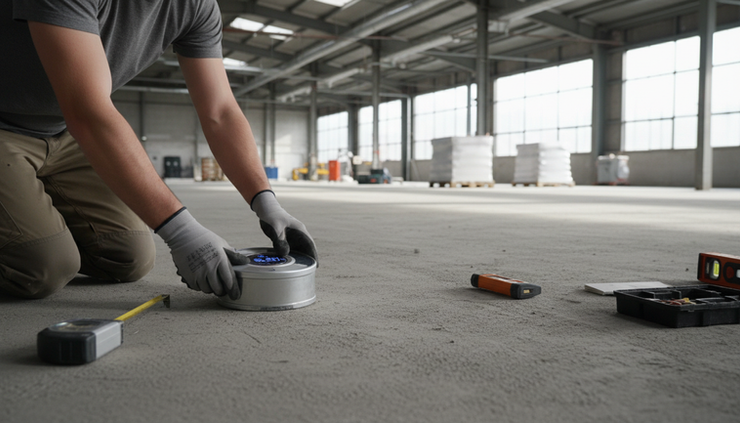
How epoxy flooring creates return on investment
Return on investment comes from more than appearance. A commercial epoxy floor can reduce ongoing ownership costs when the system matches the facility.
Lower maintenance labour
Seamless epoxy flooring minimizes grout lines, open pores, dusting concrete, and rough patches that trap dirt. Cleaning usually requires simple sweeping, auto scrubbing, or mopping with the right cleaner.
That matters in warehouses, showrooms, clinics, food support areas, and building service corridors where cleaning time repeats every day.
Reduced concrete deterioration
Bare concrete absorbs contaminants and can break down under salt, oils, water, and mechanical wear. Once concrete starts dusting, pitting, or spalling, repairs become more invasive and costly.
A well installed epoxy system protects the concrete substrate. That can delay major resurfacing and improve the long term condition of the property.
Better safety management
Slip resistance can be tailored with texture, broadcast aggregate, or flake. Line markings, safety zones, walkways, and equipment areas can also be integrated into the system.
No coating eliminates the need for proper cleaning and safety procedures, but a properly specified floor can support a cleaner and more controlled work environment.
Less downtime over the life of the floor
Cheap coatings often fail early in the highest traffic areas. Repairs then disrupt the business. A properly prepared commercial floor costs more at installation, but it can reduce unplanned maintenance and shutdown time.
For example, a 5,000 sq. ft. warehouse floor installed at $12 per sq. ft. equals $60,000 before HST. If the system performs for 10 years with routine maintenance, the capital cost is $6,000 per year before cleaning and minor upkeep. If a low cost coating fails after two or three years, removal, recoating, and downtime can erase the initial savings.
This is why specification matters. Price per square foot is only one part of the decision.
Why commercial facilities choose SurfacePro Epoxy Flooring
SurfacePro Epoxy Flooring is a specialized division of Cedarwood Development Group Inc. Since 2017, the team has installed professional epoxy floors across Toronto, Markham, North York, Scarborough, Vaughan, Richmond Hill, Mississauga, Brampton, Ajax, Pickering, and the wider GTA.
Commercial clients choose SurfacePro because the work focuses on the complete flooring system, not a quick coating. The process includes proper assessment, industrial diamond grinding, moisture testing, repair planning, and high performance finishing options.
SurfacePro works on:
Commercial and industrial coatings
Warehouse and storage floors
Retail and showroom flooring
Service areas and light industrial spaces
Decorative epoxy finishes
Metallic epoxy flooring
Garage floor coatings
Basement and residential coatings
The company brings nearly a decade of GTA installation experience, certified flooring specialists, and jobsite knowledge shaped by Ontario conditions. Freeze and thaw cycles, road salt, moisture vapour, and seasonal temperature swings all affect how floors perform. SurfacePro builds systems with those conditions in mind.
Every quote is detailed, honest, and firm after assessment. Residential garage installations are backed by a 10 year written warranty. Commercial warranty terms are matched to the selected system, site conditions, and facility use.
What to expect during a free onsite estimate
A proper estimate should feel like a technical assessment, not a sales visit.
During the onsite review, SurfacePro assesses the concrete, measures the space, checks visible damage, discusses traffic requirements, reviews chemical exposure, and explains design options with physical samples when appropriate.
For commercial facilities, the estimate may also include:
Traffic flow review
Shutdown planning
Moisture concerns
Repair priorities
Slip resistance needs
Cleaning expectations
Colour and finish choices
Staging for occupied spaces
Return to service timing
This is the best time to discuss loading docks, forklift paths, wet areas, drains, ramps, door thresholds, and any areas where water or chemicals collect.
A good quote should make the scope easy to understand. It should also explain why the recommended system fits the building.

When a premium epoxy system is worth the added cost
Premium systems make sense when the floor supports core business operations.
A stronger system is often worth the investment when the facility has:
Forklift or pallet jack traffic
Wet cleaning procedures
Chemical exposure
Public facing areas
Salt and snow tracked indoors
High cleaning standards
Tight downtime windows
Damaged or porous concrete
Heavy carts, racks, or equipment
Long term ownership plans
A lighter system may be suitable for low traffic storage or utility spaces. The key is matching system performance to the risk. Overbuilding wastes budget. Underbuilding creates early failure.
For industrial floor coatings Markham property managers often need stronger protection near loading doors, service entrances, and back of house areas where salt, grit, and equipment traffic meet. Those zones can often be treated differently from lighter use areas to manage cost.
Questions to ask before approving a commercial epoxy quote
Before choosing a contractor, ask direct questions. The answers will reveal whether the quote is built for long term performance.
What surface profile will be created before coating?
Will the floor be diamond ground?
How will moisture be tested?
What repairs are included?
What topcoat is included?
Is the topcoat polyaspartic, urethane, or another coating?
What traffic and chemical exposure is the system designed for?
How soon can the floor return to foot traffic and equipment traffic?
What maintenance practices are recommended?
What warranty applies to this commercial use case?
A contractor who can answer clearly is more likely to build a floor that performs clearly.
FAQ
How much does commercial epoxy flooring cost in Toronto and the GTA?
Most commercial epoxy flooring projects in the GTA fall between $6 and $28+ per sq. ft., depending on preparation, traffic rating, concrete condition, moisture readings, chemical resistance, and topcoat selection. Heavy duty and chemical resistant systems cost more than basic coatings.
Why does concrete preparation affect the price so much?
Epoxy flooring bonds to prepared concrete. Industrial diamond grinding, crack repair, pit repair, contaminant removal, and moisture control all take labour, equipment, and materials. Skipping preparation can lead to peeling, bubbling, and premature wear.
Is polyaspartic better than epoxy?
Polyaspartic is often used as a high performance topcoat because it can offer strong wear resistance, stain resistance, UV stability, and faster return to service. Epoxy is commonly used as part of the build system. Many commercial floors use both materials for different roles.
How long does commercial epoxy flooring take to install?
Small commercial projects may take a few days. Larger or more complex facilities may take longer, especially when repairs, moisture control, phased installation, or after hours work is required. Return to service depends on the system, temperature, humidity, and traffic type.
Can epoxy flooring handle forklifts and pallet jacks?
Yes, when the system is designed for that use. Heavy mechanical traffic usually requires stronger preparation, thicker build coats, broadcast materials, and a durable topcoat. The quote should specifically state that the system is suitable for the expected traffic.
See this process in action on your own floor
Now you know what a professional commercial epoxy floor installation process should look like, from the first moisture reading to the final polyaspartic or urethane topcoat. Every step has a reason. Every reason is backed by years of installing floors across Toronto and the GTA and seeing how Ontario conditions affect floors installed correctly versus floors installed without proper preparation.
SurfacePro Epoxy Flooring applies this complete process across Markham, Toronto, North York, Scarborough, Vaughan, Richmond Hill, Mississauga, Brampton, Ajax, Pickering, and the entire GTA.
Every project starts with a free onsite estimate. The team will assess the concrete, review traffic and chemical needs, explain system options, show samples when needed, and provide a detailed quote for the specific floor.

Call or text: (437) 477-7366
WhatsApp: (437) 477-7366
Email: hello@thecdg.ca
Website: www.surfaceproepoxy.ca
Areas served: Markham, Toronto, Vaughan, Richmond Hill, Ajax, Pickering, Scarborough, Mississauga, Brampton, and the entire GTA, Ontario.
SurfacePro Epoxy Flooring is built on quality and trusted since 2017. For a floor that works as hard as the business using it, start with the right assessment, the right preparation, and the right coating system.
Last updated: September 2026
Published by: SurfacePro Epoxy Flooring
Written by: Sarita Patel, Editor Team


Comments