


Key Epoxy Flooring Durability Factors for Markham and GTA Homes

Executive Summary: Understanding key epoxy flooring durability factors is essential for homeowners in Markham and the Greater Toronto Area seeking concrete floor coatings that withstand heavy vehicles, ground moisture, and harsh winter freeze-thaw cycles. SurfacePro Epoxy Flooring (a division of Cedarwood Development Group Inc.) engineers multi-layer systems utilizing industrial diamond grinding preparation, 100% solids epoxy basecoats, and UV-stable polyaspartic topcoats. This guide breaks down the core structural, environmental, and mechanical variables that dictate whether a floor coating lasts 2 years or over 20 years. A garage floor coating can look perfect on installation day and still fail early if the slab was not prepared, tested, and coated for local conditions. In Markham and across the Greater Toronto Area, concrete floors deal with a difficult mix: heavy vehicles, road salt, freeze-thaw cycles, summer humidity, and ground moisture.
That is why long-term performance is not only about the product in the pail. It comes from the full flooring system.
SurfacePro Epoxy Flooring, a division of Cedarwood Development Group Inc., builds multi-layer concrete coating systems around mechanical preparation, 100% solids epoxy basecoats, moisture control, and UV-stable polyaspartic topcoats. Those details can be the difference between a coating that peels in a few seasons and one that performs for many years.
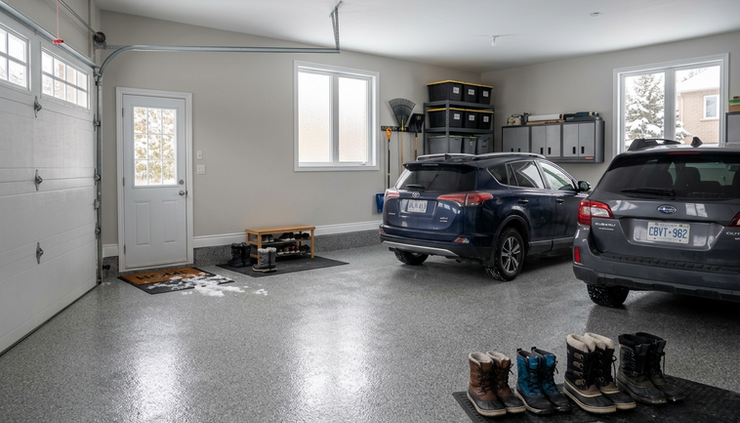
GTA garage floors face more stress than they appear to
Concrete coatings are often sold as nearly indestructible. Real life is less simple. A garage floor in York Region communities such as Unionville, Cornell, Cachet, Richmond Hill, Vaughan, and Stouffville faces pressures that many basic coatings are not built to handle.
A typical GTA garage floor may experience:
Snow melt dripping from vehicles
Road salt and de-icing chemicals
Tire heat after highway driving
Heavy vehicle loads
Dropped tools, bikes, and storage bins
Summer humidity swings
Winter freeze-thaw movement
Moisture vapour rising through the slab
Each stress affects the coating in a different way. Salt attacks weak finishes. Moisture pushes from below. Hot tires can soften or pull at low-grade coatings. Freeze-thaw cycles can widen small slab cracks.
A durable floor system has to manage all of these at once. That is where engineering and installation matter.
Surface preparation controls adhesion
The first major durability factor is also the one homeowners rarely see once the job is done. Surface preparation determines how well the coating bonds to the concrete.
Many early coating failures are not caused by the epoxy itself. They happen because the coating had no reliable surface to grip. Smooth concrete, old sealers, oil residue, laitance, or dust can all create a weak bond.
Professional installers use industrial diamond grinding to open the concrete surface. This creates a mechanical profile, often described as a roughened texture, that allows the epoxy to anchor into the slab.
Acid etching is sometimes used in basic kits, but it does not provide the same control as mechanical grinding. It can also leave residue or produce uneven results if the concrete has dense areas, previous coatings, or contaminants.
A properly prepared slab should be:
Clean and free of loose material
Mechanically profiled
Vacuumed with suitable dust control
Checked for cracks, spalls, and weak concrete
Ready to accept a coating system, not just covered quickly
The coating is only as strong as the bond between the resin and the concrete beneath it.
That bond starts before any epoxy is poured.

Resin solids percentage affects thickness and strength
Not all epoxy products cure into the same type of floor. One of the most important differences is the resin solids percentage.
A 100% solids epoxy contains no water or solvent that must evaporate during curing. What gets applied largely becomes the cured coating. That helps create a thicker, denser basecoat compared with many thin retail coatings or “garage floor paint” products.
Lower-solids coatings may look acceptable at first, but they often cure into a thinner film. That thinner layer has less material to resist abrasion, impact, hot tires, and chemical exposure.
For residential garages in Markham and the GTA, a thicker epoxy basecoat can help with:
Bond strength
Film build
Impact resistance
Chemical resistance
Flake broadcast coverage
Long-term wear
This does not mean thickness alone solves every problem. A thick coating over a poorly prepared or damp slab can still fail. The resin quality, cure schedule, surface profile, and topcoat all have to work together.
Moisture vapour can undermine the entire system
Concrete is porous. Even when it looks dry, moisture vapour can move through it from the ground below. In some homes, this movement is minor. In others, it can create pressure beneath a coating.
This is one of the most overlooked key epoxy flooring durability factors in garages, basements, and concrete storage areas.
Moisture-related failures often show up as:
Blistering
Bubbling
White mineral deposits
Peeling
Cloudy areas
Loss of adhesion
In parts of the GTA, clay soils, grading issues, older slabs, and seasonal groundwater changes can add to the problem. Winter snow melt also increases moisture load on the surface, especially near garage doors and vehicle parking zones.
Professional flooring contractors look for signs before coating. They may assess the slab’s history, visible moisture indicators, existing coating failures, and site conditions. In higher-risk situations, the system may need a moisture-tolerant primer or a vapour mitigation approach.
Skipping this step can turn a strong coating into a trapped layer over a damp surface. Once moisture pressure builds, even a hard finish can release from the concrete.
Crack repair and slab condition shape the final result
Epoxy and polyaspartic coatings can improve the look and function of a concrete floor, but they do not turn damaged concrete into new structural concrete.
Cracks, pits, spalls, and scaling need attention before coating. This is especially true in garages where salt has already damaged the slab surface. If weak concrete remains underneath, the coating may stay bonded to the top layer while the top layer separates from the slab below.
Common repairs before coating include:
Filling non-moving cracks
Patching spalled areas
Grinding raised edges
Removing loose or delaminated concrete
Treating heavily worn areas near garage doors
The goal is to create a sound surface. A coating system can protect and improve that surface, but it should not be used to hide serious slab movement or structural concerns.
Durability factor | What it affects | What can go wrong if skipped |
Diamond grinding | Mechanical adhesion | Peeling, flaking, weak bond |
100% solids epoxy | Basecoat thickness and strength | Thin wear layer, early abrasion |
Moisture assessment | Bond stability | Blistering, bubbling, delamination |
Crack and spall repair | Surface integrity | Telegraphing cracks, rough finish |
UV-stable topcoat | Colour and wear resistance | Yellowing, dullness, salt damage |
Road salt and winter chemicals demand a resistant top layer
A garage floor in Markham does not just see water in winter. It sees salt brine, grit, slush, and chemical de-icers carried in by tires and trapped in snowbanks under the vehicle.
These contaminants sit on the floor as the snow melts. If the topcoat is weak or porous, they can dull the surface, stain the finish, or begin breaking down the coating.
A strong topcoat protects the decorative flake layer and epoxy basecoat below. SurfacePro Epoxy Flooring uses UV-stable polyaspartic topcoats because they offer strong abrasion resistance, chemical resistance, and colour stability when installed as part of a compatible system.
Polyaspartic topcoats are also valued because they cure hard and can handle demanding garage use. For homeowners, that means better protection against:
Salt residue
Tire traffic
Light automotive fluids
Wet snow melt
Routine cleaning
Daily abrasion from foot traffic and storage
No coating is maintenance-free. Salt should still be rinsed or cleaned away during the winter. The difference is that a well-built system gives the floor a better chance to resist seasonal abuse.

UV stability matters near doors and bright spaces
Epoxy is strong, but standard epoxy can amber or yellow when exposed to ultraviolet light. In a garage, UV exposure often comes from open doors, windows, or bright south-facing entrances. The change may be most noticeable near the garage threshold.
A UV-stable polyaspartic topcoat helps protect the system from discolouration. It also seals the flake layer and creates the final wear surface.
This matters for more than appearance. A topcoat that resists UV, abrasion, and chemicals helps preserve the full coating system. Without it, the decorative layer and basecoat become more exposed to daily wear.
A common professional system includes:
Mechanical diamond grinding
Crack and surface repair
100% solids epoxy basecoat
Decorative flake broadcast, if desired
Scraping and smoothing of excess flake
UV-stable polyaspartic clear topcoat
Each layer has a job. The basecoat bonds. The flakes add texture and design. The topcoat protects against wear, sunlight, salt, and cleaning.
Hot tires and heavy vehicles test the coating bond
Garages are not light-duty rooms. A family SUV, pickup, or electric vehicle puts concentrated weight on the same tire contact points day after day.
Hot tire pickup is one of the most common problems with lower-quality coatings. After a long drive, tires heat up. As they cool on the garage floor, they can grip and pull at the coating. If the coating is thin, poorly bonded, or not fully cured, it may lift.
This is where the full system matters again. Hot tire resistance comes from:
Proper slab grinding
Strong epoxy adhesion
Correct cure time
Adequate coating thickness
A durable topcoat
Clean installation conditions
Heavy vehicles also increase the need for abrasion resistance. Turning tires while parked can grind dirt and salt against the surface. Over time, that motion can wear through thin coatings.
A professional-grade coating is designed for this kind of repeated stress. A basic paint kit usually is not.
Installation conditions affect curing and performance
Even the right materials can underperform if installed under poor conditions. Temperature, humidity, slab moisture, and cure timing all affect the finished floor.
In Southern Ontario, seasonal timing matters. Spring and fall can bring cool slabs and damp air. Summer can bring humidity. Winter installations may require careful control of substrate temperature and ventilation.
Installers need to manage:
Slab temperature
Air temperature
Humidity
Product pot life
Recoat windows
Cure time before vehicle traffic
A coating that cures too slowly, traps moisture, or misses its recoat window may not reach its intended strength. Professional crews plan the installation around both the product requirements and the actual jobsite conditions.
Maintenance helps the floor last longer
A well-installed epoxy and polyaspartic floor should be easier to maintain than bare concrete. It resists dusting, reduces staining, and makes cleaning simpler. Still, good habits extend its life.
For GTA garages, practical maintenance includes:
Sweep grit and sand regularly
Rinse winter salt instead of letting it sit for weeks
Use mild cleaners rather than harsh solvents
Wipe automotive fluids when noticed
Avoid dragging sharp metal edges
Place soft pads under heavy storage racks when possible
These steps are simple, but they reduce abrasion and chemical exposure. They also help preserve the gloss and texture of the topcoat.

What separates a short-term coating from a long-term system
A short-term floor coating often focuses on appearance alone. It covers the slab quickly, adds colour, and looks clean for a while. The problem appears later, when moisture, salt, hot tires, and impact begin testing the bond.
A long-term system is different. It treats the floor as a layered assembly where each part supports the next.
The most durable systems usually include:
Mechanical surface profiling
The coating bonds to prepared concrete, not a smooth or contaminated surface.
High-solids epoxy basecoat
The base layer builds strength and thickness instead of relying on a thin film.
Moisture awareness
The slab is assessed so vapour pressure does not get ignored.
Proper repair work
Cracks, pits, and weak concrete are handled before coating.
UV-stable polyaspartic protection
The topcoat resists wear, salt, chemicals, and sunlight exposure.
Correct curing
The floor is given the time and conditions needed before full use.
For Markham and GTA homes, durability comes from matching the system to the environment. A garage in this region needs more than a nice colour chip blend. It needs materials and preparation that can handle winter, moisture, vehicles, and daily use.
A well-built epoxy flooring system does not happen by accident. It starts with the slab, continues through each coating layer, and finishes with a topcoat designed for real garage conditions. When those factors work together, the floor has a much better chance of lasting for years instead of seasons. Transform Your Concrete Slab Today
Ready to upgrade your residential living space or commercial facility with high-end, durable concrete polishing?
Book Your Free Estimate Today: No hidden charges. No obligation.
Call or Text Us Directly: 437-477-7366
Email Our Team: hello@thecdg.ca
Services Provided: Concrete Polishing | Flake Epoxy | Metallic Epoxy | Garage Epoxy | Commercial Epoxy | Clear Coating | Double Coating
About SurfacePro Epoxy Flooring
Built on Quality. Trusted Since 2017.
Established in 2017, SurfacePro Epoxy Flooring specializes in professional epoxy and high-performance floor coating solutions across the Greater Toronto Area.
As a specialized flooring division of Cedarwood Development Group Inc., SurfacePro combines dedicated flooring expertise with the experience, professionalism, and contracting standards of an established renovation company. Our team works on residential, commercial, and industrial flooring projects, including garages, basements, warehouses, commercial spaces, and other high-use environments.
From surface preparation and concrete repairs to epoxy coatings and protective topcoats, we focus on proper installation, attention to detail, and long-term performance.
Is SurfacePro Epoxy Flooring an Independent Company?
SurfacePro Epoxy Flooring is a specialized flooring division of Cedarwood Development Group Inc., not a separate independent company.
The SurfacePro name was created to provide a dedicated identity for our epoxy flooring and floor coating services while operating under the established standards and experience of Cedarwood Development Group Inc.
This allows our customers to work with a specialized flooring team while benefiting from the professionalism, contracting experience, and project management standards behind Cedarwood Development Group Inc.
SurfacePro Epoxy Flooring — Built on Quality. Trusted Since 2017.
📞GET YOUR QUOTE TODAY
Upgrade your basement with a safe, durable, and professionally installed Slip-Resistant Epoxy Flooring Basement system designed for long-term performance in Markham homes.
At SurfacePro Epoxy Flooring, we specialize in high-quality epoxy systems that are built to handle moisture, improve safety, and transform your basement into a clean, functional space.
Contact SurfacePro Epoxy Flooring
📞 Call or Text: (437) 477-7366 💬 WhatsApp: (437) 477-7366
📧 Email: hello@thecdg.ca 🌐 Website: www.surfaceproepoxy.ca
Published by: SurfacePro Epoxy Flooring Editorial Team
Last Updated: October, 2026
Areas We Serve:
Markham • Toronto • Vaughan • Richmond Hill • Ajax • Pickering • Scarborough • Mississauga • Brampton • Entire GTA
Recommended Resources
Learn more about epoxy flooring options and our services:


Comments