


Long-Lasting Epoxy Floors in Ontario and the GTA: Durability First

Updated: Oct 5
A good epoxy floor is not proven on installation day. It is proven after years of hot tires, winter slush, road salt, rolling loads, dropped tools, forklift traffic, and daily cleaning.
Across Ontario and the Greater Toronto Area, durability matters more than the name on the pail. A coating can look impressive in photos and still fail early if the concrete was not prepared properly, if moisture was ignored, or if the system was not matched to the space. The best results come from engineered flooring systems, careful testing, and installers who understand local conditions.
That is the standard SurfacePro Epoxy Flooring, a division of Cedarwood Development Group Inc., has built around since 2017. Their work focuses on warrantied epoxy and resin flooring systems designed for real use, not short-term shine.
Durability Starts Before the Coating is Installed
Epoxy flooring failures often get blamed on the coating itself. In many cases, the real problem starts underneath.
Concrete is porous. It can hold moisture, dust, oil, curing compounds, old sealers, and weak surface paste. If a coating is applied over a slab that has not been properly prepared, it may peel, bubble, chip, or wear unevenly. The product may have been suitable, but the process was not.
For long-lasting epoxy floors Ontario property owners can rely on, three practices carry more weight than any brand name:
Proper surface preparation
Moisture testing and mitigation when needed
A coating system selected for the actual use of the space
These are not optional details. They are the difference between a floor that performs for years and one that needs repair far too soon.
Mechanical Diamond Grinding Gives the Coating Something to Bond To
Mechanical diamond grinding is one of the most important steps in a professional epoxy flooring installation.
The process uses grinding equipment fitted with diamond tooling to remove weak surface material and open the concrete pores. This creates a clean, textured surface profile that allows the coating to bond mechanically to the slab.
A smooth concrete floor may look ready, but epoxy does not bond well to a slick or contaminated surface. Paint, old sealer, surface dust, tire residue, and construction debris can all interfere with adhesion. Even new concrete can have a surface layer that needs to be removed before coating.
A proper grind helps with:
Removing weak or contaminated surface material
Creating the right surface texture for adhesion
Exposing hidden cracks, soft spots, and slab defects
Reducing the risk of peeling and delamination
Helping the coating system perform as designed
Hand sanding or acid washing cannot replace professional grinding for most epoxy applications. Acid may clean part of the surface, but it does not reliably create the needed profile or remove deeper contaminants. It also introduces water, which can create new moisture concerns if not handled correctly.
Professional installers assess the slab first, then choose the grinding approach based on the concrete condition and the selected coating system. This is especially important in garages, warehouses, service bays, corridors, and commercial spaces where the floor will face regular stress.

Moisture Testing Protects the Floor from Failure Below the Surface
Concrete can look dry while still releasing moisture vapour. That moisture can push against the coating from below. Over time, pressure can cause blisters, cloudy areas, peeling, or bond failure.
Ontario properties can face moisture issues for several reasons. Older slabs may lack a proper vapour barrier below the concrete. Basements and ground-level slabs may be affected by site drainage. Commercial buildings may have large areas of concrete with different moisture conditions from one zone to another.
A responsible installer does not guess. Moisture testing gives useful information before the coating is installed.
Testing may include:
Checking moisture levels inside the slab
Measuring surface conditions
Looking for visible signs such as dark patches or efflorescence, which is a powdery mineral deposit
Reviewing the age, location, and history of the concrete
Identifying areas that may need a moisture mitigation barrier
A moisture mitigation barrier is a specially selected coating layer designed to reduce the movement of moisture vapour before the main flooring system is applied. It is not needed for every floor, but when testing shows a risk, it can prevent major problems.
Skipping this step can make a floor look less expensive at first. It can also turn the project into a repair job later. For property owners and facility managers, the better value is a system designed around the slab’s actual condition.
Ontario Conditions Demand More Than a Basic Coating
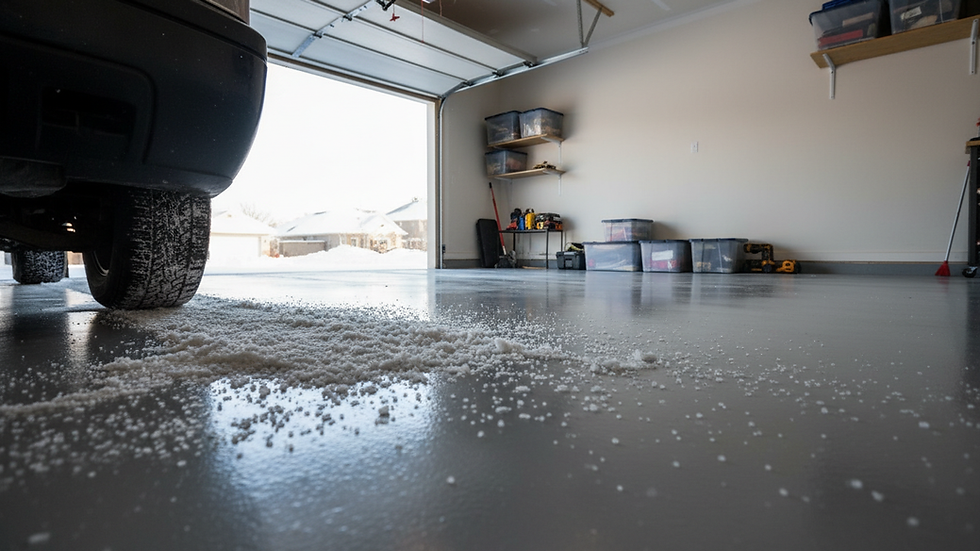
The Greater Toronto Area and surrounding Ontario communities face conditions that can be hard on coated floors. Winter road salts get tracked into garages, service areas, loading zones, and commercial entrances. Freeze-thaw cycles add stress as snow and slush melt, refreeze, and leave behind corrosive residue. Heavy vehicles create point loads, abrasion, hot tire pickup, and impact.
A long-lasting floor must handle more than foot traffic.
Common Ontario stressors include:
Salt and de-icing chemicals from winter roads
Slush, standing water, and meltwater
Freeze-thaw exposure near doors and ramps
Hot tires in residential garages
Heavy vehicle traffic in service and industrial spaces
Forklifts, pallet jacks, carts, and rolling equipment
Dropped tools, parts, and materials
Cleaning chemicals and degreasers
This is why durability must be designed into the full system. The coating thickness, primer, body coat, broadcast material, topcoat, and surface texture all play a role.
A garage floor in Markham does not need the same specification as a food service back room in Toronto or an industrial shop in York Region. A residential basement does not face the same wear as a loading dock. Matching the system to the use case is what protects the investment.

Different Spaces Need Different Epoxy Flooring Systems
Epoxy flooring is not one single product. It is a category of resin-based flooring systems. The right system depends on traffic, exposure, budget, aesthetics, maintenance needs, and safety requirements.
A professional installer should ask how the floor will be used before recommending a system.
Space type | Common needs | Flooring considerations |
Residential garages | Salt resistance, hot tire performance, easier cleaning, improved appearance | Strong surface preparation, suitable broadcast texture, durable topcoat |
Basements and utility rooms | Moisture awareness, clean finish, low maintenance | Moisture testing, compatible primer, careful crack treatment |
Retail and commercial spaces | Foot traffic, appearance, cleaning routines, slip resistance | Wear resistant topcoat, suitable finish level, planned maintenance |
Warehouses and shops | Rolling loads, abrasion, impact, chemical exposure | Heavier build system, high wear topcoat, possible repair of damaged concrete |
Service bays and industrial areas | Vehicle traffic, fluids, salt, tools, frequent cleaning | Chemical resistant system, strong profile, reinforced wear surface |
Residential projects often focus on cleanability, appearance, and salt resistance. Commercial projects usually add slip resistance, cleaning requirements, and public safety concerns. Industrial spaces need greater attention to thickness, impact resistance, chemical exposure, and traffic patterns.
This is where experienced specification matters. A thinner decorative system may be appropriate in one space and inadequate in another. A heavy-duty system may be the right choice for a shop floor but unnecessary for a low-traffic storage room.
When comparing durable epoxy flooring GTA options, look for professional epoxy installers Markham property owners can speak with directly, heavy-duty garage floor coating Ontario experience, and commercial epoxy contractors Toronto facilities can trust for clear specifications.
A Durable Floor is an Engineered System, Not a Product Label
Brand names can create a false sense of security. A well-known coating installed over poorly prepared concrete can still fail. A suitable coating installed in the wrong environment can still wear out early. A thin system installed where a heavy build system is needed can still disappoint.
The better question is not, “What brand do you use?” The better question is, “What system are you specifying for this slab and this use?”
A proper recommendation should account for:
Concrete age and condition
Existing coatings or contamination
Moisture levels and vapour risk
Crack repairs and joint treatment
Expected traffic and loading
Exposure to salt, water, oils, or chemicals
Desired texture and slip resistance
Cleaning methods and maintenance schedule
Warranty terms and limitations
SurfacePro Epoxy Flooring approaches projects this way. Since 2017, the company has provided engineered, warrantied flooring systems across Ontario and the GTA, including Markham, Unionville, York Region, and the wider Toronto area. Their process is built around assessment, preparation, system matching, and installation standards that support long-term performance.
That matters because warranty value depends on the work behind it. A warranty should reflect a controlled process, not a sales promise. Preparation, testing, product compatibility, installation conditions, and intended use all affect whether a floor can perform as expected.
What to Ask Before Choosing an Epoxy Flooring Installer
A clear conversation before the job starts can prevent problems later. Property owners and facility managers can learn a lot from how an installer answers technical questions.
Ask these questions before approving the work:
How will the concrete be prepared?
The answer should include mechanical diamond grinding or another suitable mechanical method. Be cautious if the plan relies only on cleaning, light sanding, or acid washing.
Will you test for moisture?
A professional answer should explain how moisture risk will be assessed and what happens if the slab needs mitigation.
What system are you recommending and why?
The installer should connect the floor system to the space. A garage, retail unit, warehouse, and service bay should not all receive the same generic recommendation.
How will the floor handle road salt and winter conditions?
In Ontario, this question is practical. The answer should address salt exposure, meltwater, freeze-thaw conditions near entrances, and topcoat performance.
What does the warranty cover?
A clear warranty should explain coverage, exclusions, maintenance expectations, and the type of use the system is designed to withstand.
What maintenance does the floor require?
No coating is maintenance-free. A durable epoxy floor still benefits from regular cleaning, prompt removal of harsh chemicals, and protection from severe impact or cutting.

Why SurfacePro Focuses on Specification Before Installation
SurfacePro Epoxy Flooring, a division of Cedarwood Development Group Inc., serves homeowners, property owners, and facility managers who need floors built for Ontario conditions. Their experience since 2017 has shaped a practical approach: assess the concrete, prepare it properly, test for moisture concerns, then install an engineered system suited to the environment.
That approach is especially relevant in the GTA, where buildings vary widely. A newer garage in Markham may have different slab conditions than an older commercial unit in Toronto. A Unionville basement may need a different moisture strategy than a warehouse in York Region. Heavy vehicle areas need different wear resistance than residential storage spaces.
SurfacePro’s value is not simply that they install epoxy. It is that they focus on flooring systems designed to withstand known local stressors, including winter road salts, freeze-thaw cycles, and heavy vehicle traffic.
For a project-specific recommendation, request a quote through SurfacePro Epoxy Flooring’s quote form.
Frequently Asked Questions
How Long Should an Epoxy Floor Last in Ontario?
Service life depends on concrete condition, preparation, moisture control, system thickness, traffic, and maintenance. A properly specified and installed epoxy flooring system can deliver years of reliable performance, especially when it is matched to the space.
Is Epoxy a Good Choice for Garages with Winter Road Salt?
Yes, when the system is designed for that exposure. The floor needs proper grinding, a suitable coating build, and a topcoat that can handle salt, slush, tire traffic, and routine cleaning.
Can Epoxy Be Installed Over Old Concrete?
Often, yes. The concrete must be assessed first. Old coatings, weak concrete, oil contamination, cracks, and moisture concerns may need treatment before installation.
Why Does Moisture Testing Matter if the Floor Looks Dry?
Moisture can move through concrete even when the surface appears dry. Testing helps identify vapour-related risks before the coating is installed. If needed, a moisture mitigation barrier can help protect the system.
Are All Epoxy Floors the Same?
No. Epoxy floors vary by preparation method, primer, coating thickness, broadcast material, topcoat, texture, and intended use. A residential garage system is different from a commercial or industrial floor.
The Takeaway
Durable epoxy flooring comes from disciplined installation, not product labels alone. Mechanical diamond grinding, moisture testing, mitigation when needed, and correct system selection all matter.
For Ontario and GTA properties, the floor must also stand up to road salt, freeze-thaw exposure, daily wear, and vehicle traffic. A properly engineered system gives the coating the best chance to perform for the long term.
SurfacePro Epoxy Flooring brings that durability-first approach to residential, commercial, and industrial flooring projects across the region. The right floor starts with the right assessment.
To book a professional epoxy flooring assessment:
Phone
(437) 477-7366
Message SurfacePro Epoxy Flooring directly for project questions, photos, and estimate coordination. (437) 477-7366
Website
Visit the SurfacePro Epoxy Flooring www.surfaceproepoxy.ca
Service Areas
Markham, Unionville, Cornell, Thornhill, Greensborough, Box Grove, Cachet, Milliken Mills, York Region, Toronto, Vaughan, Richmond Hill, Scarborough, Ajax, Pickering, Mississauga, Brampton, and the GTA.
SurfacePro Epoxy Flooring is a division of Cedarwood Development Group Inc. The team installs professional epoxy and protective concrete coating systems for residential and commercial properties, with a focus on proper preparation, durable multi-layer systems, and written warranty protection.
Written by Sarita Patel, Lead Content Specialist, Marketing and Editorial Team
SurfacePro Epoxy Flooring


Comments