


Retail Epoxy Flooring Cost Guide for Toronto Businesses

By Sarita Patel, SurfacePro Epoxy Flooring Editor Team
Published September 2026
Retail floors work harder than they look. They take daily foot traffic, carts, moisture from winter boots, cleaning chemicals, dropped products, display changes, and constant visual scrutiny. When the floor starts to stain, crack, peel, or look tired, it affects more than maintenance. It changes how the space feels.
That is why many shops, showrooms, salons, clinics, and service-based storefronts look at epoxy as a long-term flooring option. The challenge is knowing what a fair quote should include. Retail epoxy flooring cost can vary widely because the final price depends on the condition of the concrete, the coating system, the design, the schedule, and the level of durability required.
This guide explains the main cost drivers for Toronto businesses, what to compare in quotes, and how to plan a floor upgrade without unpleasant surprises.
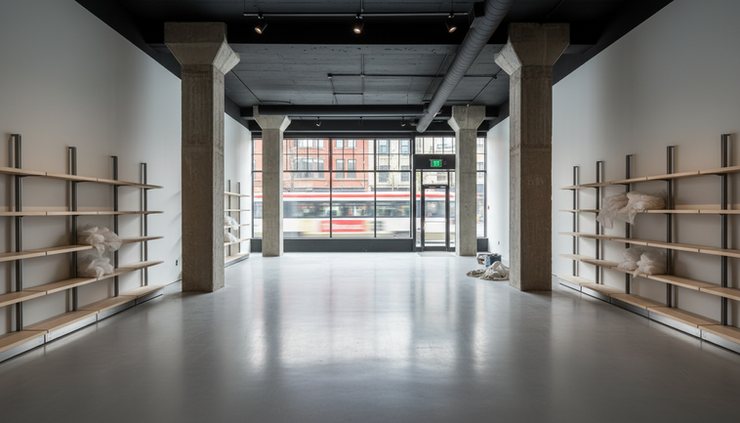
Why epoxy pricing varies so much in retail spaces
Epoxy is not a single product with one fixed price. It is a flooring system. A basic protective coating for a storage area is different from a decorative finish for a boutique, grocery store, clinic, or dealership showroom.
The quote usually reflects four broad areas:
Surface preparation
Coating materials
Installation time
Business disruption and scheduling
Two stores with the same square footage can have very different costs if one has clean, sound concrete and the other has old tile glue, cracks, moisture issues, or uneven areas.
Retail also adds another layer. The floor needs to perform, but it also needs to look intentional. A back-of-house coating can be simple. A customer-facing retail floor coating often needs better finish control, consistent colour, slip resistance, and clean details around fixtures, walls, thresholds, and displays.
The condition of the concrete is the biggest cost factor
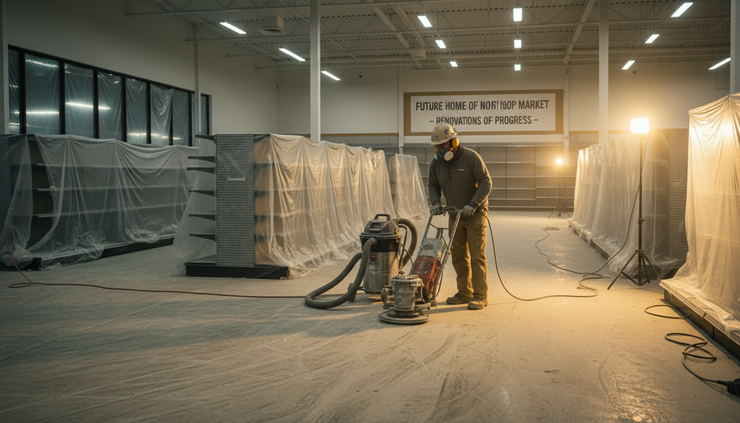
The existing slab often determines how much work the project really needs. Epoxy bonds to prepared concrete, not to dust, grease, loose paint, old adhesive, or weak surface material.
A contractor may need to grind, shot blast, patch, clean, or repair the floor before coating begins. This can affect both labour and schedule.
Common issues in Toronto retail spaces include:
Old VCT or ceramic tile adhesive
Salt damage near entrances
Cracks from slab movement
Pitted concrete in older buildings
Oil or chemical contamination from former tenants
Uneven transitions between renovated areas
Moisture vapour concerns in ground-level units
A newer concrete slab may need only mechanical grinding and minor patching. An older storefront on a busy street may need more serious preparation before any coating should be installed.
Skipping preparation is one of the most common ways to lower the upfront price, but it can shorten the life of the floor. If a quote looks unusually low, ask exactly how the concrete will be prepared.
A strong epoxy floor starts below the coating. The finish can only perform as well as the surface it bonds to.
The coating system affects the price and lifespan
A retail epoxy project is usually built in layers. The system may include a primer, body coat, decorative broadcast, and topcoat. Some projects need extra build thickness or specialty finishes for abrasion, UV stability, or chemical resistance.
Here are common system types and how they compare.
Flooring system | Best suited for | Cost level |
Solid colour epoxy | Stockrooms, simple retail areas, service counters | Lower |
Epoxy flake system | Boutiques, salons, clinics, customer washrooms, entrances | Mid-range |
Metallic epoxy | Showrooms, feature areas, design-led interiors | Higher |
Quartz broadcast system | High-traffic retail, food service, wet areas | Higher |
Epoxy with urethane or polyaspartic topcoat | Spaces needing added wear resistance or faster return to service | Mid to higher |
Solid colour systems are clean and practical, but they can show scratches, dust, and wear patterns more clearly in public areas. Flake systems hide dirt well and add texture. Metallic epoxy can create a premium look, but it requires more design control and installation skill.
For businesses comparing epoxy flooring cost Toronto contractors quote, the system details matter more than the headline number. A one-coat job and a full multi-layer commercial system are not the same product.

Square footage matters, but it is not the whole story
Larger spaces often cost more overall, but the price per square foot may become more efficient once setup, equipment, and labour are spread across a bigger area. Smaller retail units can have a higher per-square-foot cost because the crew still needs to mobilize, prepare, tape, mix, coat, and clean up.
That means a small boutique, salon room, or pop-up retail unit may not be as cheap as expected. The work still requires proper surface preparation and curing time.
Layout also matters. Open areas are faster to coat. Tight layouts take longer.
A floor with many of the following details can cost more:
Fixed counters
Display islands
Floor drains
Columns
Small rooms
Narrow corridors
Multiple entrances
Built-in shelving
Complicated edge work
If displays or millwork are already installed, the crew may need extra time to protect them. In some cases, removing fixtures before coating can reduce labour and improve the final result.
Design choices can increase or control the budget
Retail spaces use floors as part of the customer experience. A clean satin finish feels different from a glossy metallic floor. A neutral flake pattern feels different from a bold colour blend.
Design choices that may affect cost include:
Custom colour matching
Multi-colour flake blends
Metallic pigments
Borders or zones
Logos or graphic inlays
Higher-gloss or matte topcoats
Extra slip-resistant texture
UV-stable topcoats near windows
For most retail stores, the practical goal is to balance appearance, durability, maintenance, and budget. A mid-range decorative flake system often gives a strong balance because it hides dust, adds traction, and works with many interior styles.
A custom metallic floor can suit a showroom or feature retail space, but it may not be the best fit for every store. Highly glossy floors can look impressive, yet they may show scratches and dust more easily under bright lighting.
Downtime can be part of the real cost
The installation price is only one part of the budget. Lost trading time can matter just as much.
A retail floor project may affect:
Store hours
Staff scheduling
Product storage
Customer access
Deliveries
Cleaning schedules
Reopening plans
Some epoxy systems need longer cure times before heavy use. Others are designed for faster turnaround. A faster system may cost more in material, but it can reduce downtime. For a busy retail business, that trade-off may make sense.
Ask the contractor when the floor can handle:
Light foot traffic
Restocking
Shopping carts
Display fixtures
Floor cleaning
Full customer traffic
Toronto businesses also need to think about building rules. Mall units, plazas, medical retail spaces, and mixed-use buildings may have restrictions on work hours, noise, dust, odour, and loading access. These details can affect scheduling and labour.
What a proper commercial quote should include
When comparing quotes for commercial epoxy flooring Toronto projects, look beyond the final total. A clear quote should explain what is included, what is excluded, and what assumptions were made.
A useful quote should cover:
Surface preparation
The quote should state whether the floor will be mechanically ground, shot blasted, patched, or cleaned. It should also mention how existing coatings or adhesives will be handled.
Concrete repairs
Crack filling, spall repairs, joint treatment, and levelling should be described clearly. Some repairs may be priced separately if the full condition is not visible during the first visit.
Coating system
The quote should list the primer, base coat, broadcast material, and topcoat where applicable. It should also identify whether the system is solid colour, flake, quartz, metallic, or another finish.
Thickness and performance expectations
Retail floors need enough build to handle traffic. If slip resistance, chemical resistance, or high abrasion resistance matters, that should be in the scope.
Timing and access
The quote should explain how long the work will take, when the space can reopen, and what access the crew needs.
Warranty terms
A warranty should be easy to understand. It should explain what is covered and what is not, including damage from slab movement, moisture, misuse, or heavy impact.
Maintenance guidance
A good installer should explain how to clean the floor and what products to avoid.
Warning signs in a low quote
A lower price is not always a problem. Some projects are simple. A clean, open, well-prepared floor with a basic system should cost less than a complicated decorative installation.
The risk comes when a low quote leaves out critical steps.
Watch for quotes that:
Do not mention mechanical surface preparation
Include only vague product descriptions
Promise unrealistic turnaround without explaining the system
Avoid discussing cracks, moisture, or old adhesive
Do not confirm the number of coats
Leave out topcoat details
Offer no care instructions
Use one generic price without inspecting the floor
A commercial floor coating needs to handle real business use. If a coating fails, the repair can disrupt the store again. That makes the cheapest quote expensive if it leads to peeling, bubbling, soft spots, or uneven wear.
How to plan a retail epoxy budget
Good planning starts before the installer arrives. The more information available, the more accurate the quote can be.
Before requesting pricing, gather:
Approximate square footage
Photos of the current floor
Details on existing flooring materials
Notes on cracks, stains, or damp areas
Desired finish style
Required reopening date
Building access rules
Hours when work can happen
Whether fixtures can be removed
If the space is leased, review the lease before choosing a finish. Some landlords require approval for permanent flooring changes. In malls or managed commercial properties, work may also need to follow site rules for noise, dust, waste removal, and after-hours access.
For multi-location retailers, consistency matters. A standard system specification can help keep colour, texture, maintenance, and performance similar across stores.
Maintenance affects long-term value
Epoxy is popular in retail because it can be easier to clean than many porous flooring materials. Still, it is not maintenance-free.
A well-maintained floor lasts longer and looks better. Basic care usually includes:
Removing grit that can scratch the surface
Cleaning spills promptly
Using neutral cleaners where recommended
Avoiding harsh solvents unless approved
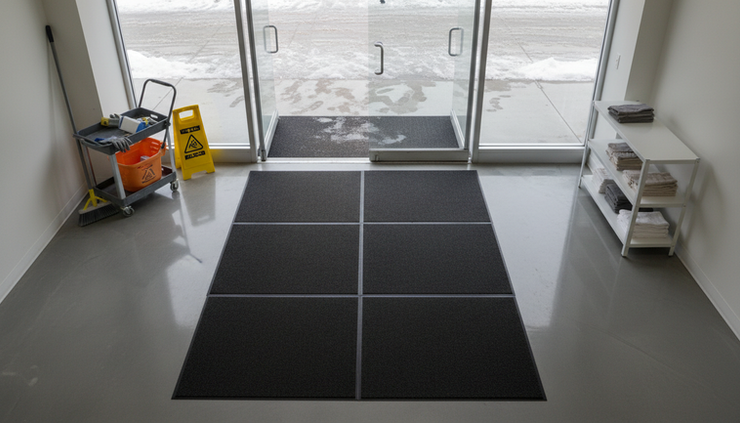
Placing mats at entrances during winter
Using protective pads under movable displays
Avoiding dragging heavy fixtures across the coating
Toronto winters can be tough on retail floors. Salt, slush, and grit enter through front doors and can dull the finish over time. Good entrance mats and routine cleaning help protect the topcoat.
If the floor starts to lose gloss after years of use, it may not need full replacement. Some systems can be screened and recoated if the base layers are still sound. That can extend the service life at a lower cost than starting over.
How to choose the right finish for a Toronto retail space
The best finish depends on how the store is used. A clothing boutique, pharmacy, pet supply store, fitness retail studio, and food service counter do not need the same floor.
For higher-traffic spaces, durability and easy cleaning may matter most. For showrooms, appearance may carry more weight. For wet or spill-prone businesses, traction should be a priority. For spaces with large windows, UV resistance may be worth discussing.
Here is a simple way to narrow the options:
Retail need | Practical flooring direction |
Budget-friendly refresh | Solid colour epoxy with suitable topcoat |
Better dirt concealment | Decorative flake system |
Premium visual impact | Metallic epoxy or custom finish |
Wet or high-slip-risk areas | Textured flake or quartz broadcast |
Faster reopening | Fast-cure system, if suitable for the site |
Heavy carts or equipment | Higher-build system with abrasion-resistant topcoat |
The goal is not to buy the most expensive system. The goal is to choose the system that fits the store’s traffic, cleaning routine, downtime limits, and visual standard.
A better way to compare epoxy flooring quotes
When reviewing estimates, place them side by side and compare the scope line by line. If one contractor includes grinding, crack repair, primer, broadcast, and topcoat, while another lists only “epoxy coating,” the cheaper number may not be a fair comparison.
Ask these questions before approving the work:
What preparation method will be used?
How will cracks and joints be handled?
What exact system is being installed?
How many coats are included?
What finish and texture should be expected?
When can the store reopen?
What cleaning products are recommended?
What conditions could change the price?
What warranty applies to this type of retail use?
A reliable contractor should answer clearly. They should also be willing to explain why one system costs more than another.
For a Toronto retail business, the right floor should do three things well: look good, handle daily use, and reduce maintenance stress. Price matters, but scope matters more. A clear quote helps you see what you are paying for and whether the system fits the way the space actually operates.
To discuss your store, showroom, or commercial unit, call Surface Pro Epoxy Flooring at 437-477-7366 and request a site-specific quote. A proper assessment is the best way to turn a rough idea into a dependable project budget. See This Process in Action on Your Own Floor. Book Your Free Estimate Today.
Now you know exactly what a professional epoxy floor installation process looks like from the first moisture reading to the final polyaspartic coat. Every step has a reason. Every reason is backed by nearly a decade of installing floors in Toronto and the GTA and watching what the Ontario climate does to floors installed with this process versus floors installed without it.
SurfacePro Epoxy Flooring applies this complete six-step process to every project we complete across Toronto, North York, Scarborough, Markham, Vaughan, Richmond Hill, Mississauga, Brampton, Ajax, Pickering, and the entire GTA. Every project starts with a free on-site estimate. Every residential garage installation is backed by our 10 year written warranty. Every quote is detailed, honest, and firm.
Call or text us today. We will come to your home, assess your concrete, walk you through your design options with physical samples, and show you exactly what this process delivers for your specific floor.
Call or Text: (437) 477-7366 WhatsApp: (437) 477-7366 Email: hello@thecdg.ca Website: www.surfaceproepoxy.ca
Areas We Serve: Markham, Toronto, Vaughan, Richmond Hill, Ajax, Pickering, Scarborough, Mississauga, Brampton, and the Entire GTA, Ontario
About SurfacePro Epoxy Flooring
Since 2017, SurfacePro Epoxy Flooring has been a trusted name in professional epoxy floors across the Greater Toronto Area. As part of Cedarwood Development Group Inc., we bring nearly a decade of experience and a team of certified flooring specialists to every project, from residential garages and basements to commercial facilities and industrial spaces.
You get expert craftsmanship, lasting results, and service you can count on. We also back our work with a warranty, so you can invest in your floor with total confidence.
Ready for a floor built to last? Request your quote today.
Our Services Include:
Garage Floor Coatings
Metallic Epoxy Flooring
Commercial and Industrial Coatings
Decorative Epoxy Finishes
And much more
SurfacePro Epoxy Flooring — Built on Quality. Trusted Since 2017.
Last Updated: September 2026 | Published by SurfacePro Epoxy Flooring
Written by: Sarita Patel, Editor Team | Sarita.p@thecdg.ca
Recommended Resources
Learn more about epoxy flooring options and our services:


Comments